print this article
ARCHIVES . Articles

September 4-10, 2003

city beat

Life Near the Precipice

Worries about a general lack of security dominates conversations with everyday Iraqis.

by Rich Miller

BAGHDAD -- Fadia was crying when we arrived but explained she had a

stomachache and that it wasnķt serious. The pain would soon pass, she said, tears streaming from her red, swollen eyes.

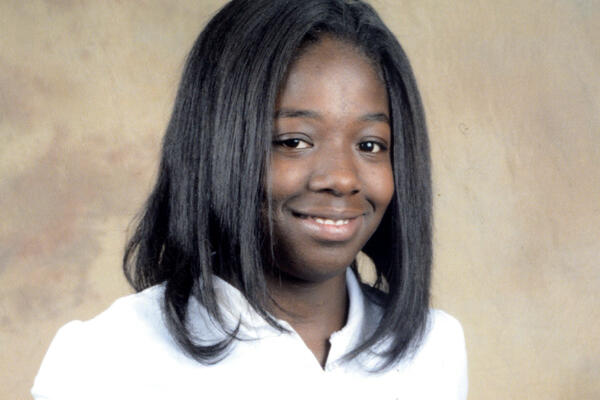
Fadia's home, in a tiny, poverty-stricken Christian ghetto, was one of my first stops after arriving in Baghdad. Her uncle works in my apartment building in Chicago and he had asked that I check up on his family.

Being Christian in a predominantly Muslim country, an already dangerous postwar situation becomes much more precarious, he explained. After reading a letter from her uncle, Fadia invited me and my driver to sit in the shade of her family's front porch.

Her parents were at the market, she said, and would return in a few hours. She served tea and cold water and eventually talked about her life in Baghdad, such as it was.

Fadia and her two sisters, Wassan and Rasha, are rarely allowed to leave their parents' small house. They are too afraid, she said. Rampant rapes, kidnappings, carjackings and murders have imprisoned most Iraqi women inside their own homes.

The rapid rise of Islamic fundamentalism, which strongly discourages women from appearing in public without a male escort, has also frightened them into staying out of sight. Understandably, Christian women -- already discriminated against here for centuries -- are doubly scared.

"There is no security," the teenaged Fadia said, an anxious look on her face which, by now, was free of tears but filled with frustration. "We cannot go out." Instead, she and her sisters sit in their house, which boils for several hours a day when the electricity goes out.

Security or the lack thereof, is all anybody wants to talk about in Iraq these days. Westerners and wealthy Iraqis cower inside five-star hotels protected by razor wire and American tanks. They warn each other against walking alone -- even if it's just up the block to buy a pack of cigarettes.

The American occupational government, the Coalition Provisional Authority, has barricaded itself behind layers upon layers of intense security, completely isolating itself from the Iraqi people and just about everyone else. The U.S. military is so freaked out that it recently shut down a main Baghdad thoroughfare in front of a hotel occupied by soldiers. Forcing Iraqi motorists to detour down a narrow side street, the barriers left traffic jammed for blocks.

There are no military patrols through Fadia's neighborhood and there is no visible Iraqi police presence. The Americans have warned Iraqis not to carry weapons or they'll be treated as combatants, so neighborhoods cannot defend themselves against armed bands of hoodlums that roam unchallenged throughout the sprawling city.

Many of those same criminals now terrorizing Iraqi citizens were among the 40,000 convicts whom Saddam Hussein released from prisons just before the start of the war. But so far, the Americans have shown little interest in rounding up the worst of the bad guys, which has only bolstered a general state of anarchy and fear.

In the holy city of Najaf, two hours south of Baghdad, hundreds of mourners silently baked under the noontime sun. They watched as workers sifted through, and then hauled off, the rubble of a car-bomb explosion that killed Shia religious leader Mohammad Baqir al-Hakim and almost 100 others two days earlier.

Iraqi police tried barring reporters from the bomb site, claiming the mourners were angry at the media for publishing photos of the victims.

"They are shooting journalists," the policeman warned. But a local man, a former Iraqi soldier, helped my driver Safa and I slip past the barricades. I snapped a couple of quick photos before Safa hustled me across the street. "I fear you are crazy," he said.

Moments before he was assassinated, Hakim delivered a sermon criticizing the Americans for not allowing Shias to protect themselves. His message still echoed in the crowd when I arrived.

"The Americans cannot protect us," said one mourner, who would not identify himself. "We must be allowed to protect ourselves against these criminals." Standing nearby, others forcefully voiced their agreement. Several minutes later, on the opposite side of the mosque, an angry crowd gathered to threaten a thief who was being arrested by Iraqi police.

Despite widespread calls throughout Iraq and America to give Iraqis more control over their own security, it's not as easy as it sounds.

Along with his brother, who sits on the Iraqi Governing Council, Hakim led "Badr's Brigade," a religious militia that disarmed under American pressure. His final sermon demanded that the Americans allow his brigade to re-arm. Two days after the bombing, members of Badr's Brigade were seen carrying AK-47 rifles, unchallenged by U.S. soldiers. Still, an armed Badr's Brigade could easily spark a civil war.

A week before he was assassinated, Hakim's militia clashed with ethnic Kurds in northern Iraq after local Shias (ethnic Turks) blamed them for the destruction of a newly built Shia shrine. The fight lasted for days, and at times threatened to bring the Turkish Army into the conflict. If Badr's Brigade is even semi-officially allowed to rearm, the Kurds will undoubtedly pick up weapons too.

Then there's "Sadr's Brigade," also called the "Army of the Mahdi," a still-unarmed radical Shia organization led by Muqtada Sadr, a young, charismatic cleric who wields huge influence in Baghdad's sprawling Shia slum, Sadr City.

The Sadr and Hakim families have feuded for years so, if Hakim's brigade is armed, Sadr will surely move to "defend" himself against his rivals. Sadr, also loudly anti-American, has repeatedly denounced Hakim and his brother for cooperating with the occupying powers.

And then, there are the various Sunni Muslims who would soon get into the act, followed by every other faction, tribe, sect and political party imaginable.

It seems that almost everyone here believes we're sitting on a precipice, and leaning precariously towards civil disaster. But it didn't have to happen this way.

A year ago, General John Abizaid, an Army man who assumed duties as commander of the U.S. Center Command in July, published an internal Defense Department book about urban warfare. Abizaid's Doctrine for Joint Urban Operations was all but ignored by Secretary of Defense Donald Rumsfeld and Gen. Tommy Franks, who ran the war and initial postwar occupation.

Abizaid wrote about the massive troop requirements for urban warfare. He warned of rapid burnout of soldiers and equipment assigned to urban battlegrounds. And time and again, Abizaid referenced both catastrophic instances of overconfidence and underpreparedness among commanders and the disastrous misunderstandings of local cultures and their motivations.

He also stressed how "essential" it is that "law enforcement" and other "routine activities" be "returned to civilian agencies as quickly as possible." Abizaid was brought in to clean up the mess created by Franks and Rumsfeld. But it may be too late.

Meanwhile, back in Baghdad, Fadia's mother and father, Janan and Hermes, have finally arrived home. After using my satellite phone to call her sister and brother-in-law in Chicago, Janan sat uncomfortably and talked about her life, voicing the expected complaints about crime, the lack of electricity, the harsh treatment by Muslims and the absence of jobs. I asked Janan how she felt about her family's future.

"I can only hope, I can only pray, it gets better," she said.

Then, she asked if I would please take her daughters back to America.

Rich Miller is a Chicago-based journalist who traveled to Iraq to find stories that have been glossed over by the mainstream media. "Being There" will appear in City Paper throughout the next month.


-- Respond to this article in our Forums -- click to jump there
More Articles

Browse The
April 4, 2002
Issue
Recent Comments
Web Exclusives
Good Grief
Burn Notice
Fuel
Great Migration
THEATER REVIEW: Coming Home
Sėla
"Pedal to the Side"
BYOTY Book Fair
Sat., Oct. 17, noon-6 p.m., free, Little Berlin, 119 W. Montgomery St., 610-308-0579, littleberlin.org.


search restaurants by name
search by neighborhood
Search
search by cuisine
title
theater

Search
search for:
within:   of  
more jobs
(use zip or city, state)
Search
"Great vision without great people is irrelevant."
—Jim Collins, Author,
"Good to Great"
In Partnership with JobCircle
start date / /  select date
end date / /  select date
category
keyword
Search Buy Concert Tickets
Category:
Keywords: Search

Search Real Estate

ALL | MON | TUE | WED | THU | FRI | SAT | SUN

or

LOCATION:

ADVERTISEMENT